Mike Nolan

Forum Replies Created
-
AuthorPosts
-
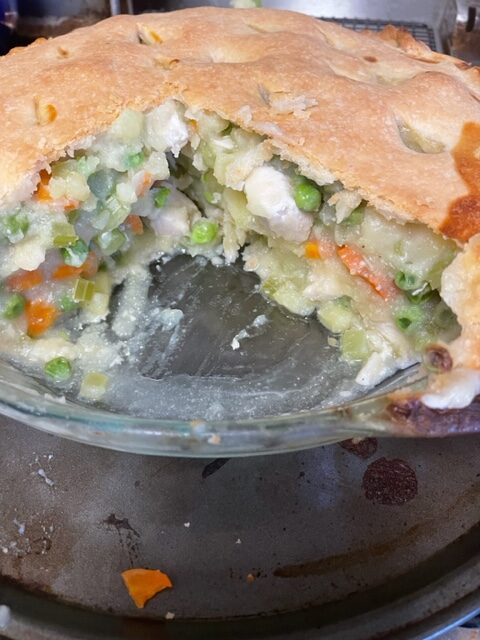
It was a little dry in the center, but I had made extra gravy and just put some on top.
Village Inn used to have a decent chicken pot pie, but they 'simplified' their menu during the pandemic and that was one of the things they dropped, along with my wife's favorite waffle combination. So, we've stopped going there.
Some notes on the recipe, mainly for me to remember for next time. 🙂
I used a 9.25 inch deep dish glass pie pan.
I used 20 ounces of frozen boneless chicken breasts, diced and sauteed in butter
3 large potatoes (I actually used 4 but I think 3 would be better), diced
2 ribs of celery, diced
a handful of baby carrots, diced
about 8 ounces of frozen peas
1/2 medium onion, diced
2 cups of chicken stock (for the gravy)
1 recipe of hot water pastry (Susan Purdy's recipe, the version in the recipes section is scaled up by 50%), chilled for at least a half hourBoil the potatoes to desired softness, save the water to add to the gravy.
Sautee the chicken in some butter (season with salt and pepper), then remove chicken and use the liquid to sautee the onions, celery and carrots until soft.
Make a roux with 3 tablespoons of butter and an equal amount of flour, then add the chicken stock and some of the potato water. Season with salt and pepper.
35 minutes in the oven at 425.
We both had two slices of the chicken pot pie for supper tonight, it was excellent. I need to make this more often!
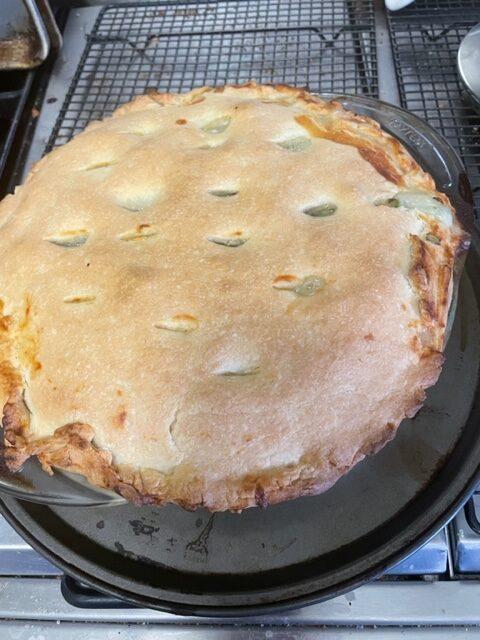
Today's chicken pot pie, using Susan Purdy's hot water crust recipe:
Attachments:
You must be logged in to view attached files.That's an interesting question about how warmer winters are affecting the maple syrup.
I always thought the darker syrup came later in the season as the weather warmed up, maybe that would happen faster after a warmer winter?
I've been so busy on another project that I forgot to start up the weekly topics. :sigh:
My wife has decided she really doesn't like the semolina bread made with the whole grain durum flour, though she likes the honey wheat bread, which is 50% whole grain wheat; maybe I just need to add a bit more honey to it?
Anyway, I will be looking for a reasonably priced source for semolina that is mostly endosperm. I may wind up just ordering another 50 pound bag of it if I can't come up with a more local source.
See my comments on regional GS cookie differences in the other thread.
I saw another story on Girl Scout cookies that went into the differences in product depending on which of the two bakeries they use it comes from, they showed pictures of the thin mints from both bakeries and there were major differences between them. One is more minty, the other more chocolatey, they said.
https://www.wideopencountry.com/girl-scouts-cookies-map/
Which bakery supplies which state may change from year to year, too.
There's a lot of variance in food prices around the country, some of it is due to regional supplier availability, but Californians have to deal with an increasing number of regulations on food, some of which are affecting national trends.
Eggs were $1.92 a dozen at Aldi the other day, and they had a good supply of them.
It doesn't appear flour prices are going to go down much any time soon, though. Costco has 25 pound bags of Ardent Mills bleached flour for $10.99, but I think 12 pound bags of KAF AP went up a little, though they're still under $10.
I didn't look at the sugar prices at Aldi, but I did see someone loading what looked like several dozen bags of sugar into her car, along with numerous bottles of oil.
Have you checked the restaurant suppliers to see if you can place a will-call order? You may need a tax permit or NFP determination letter from the IRS.
The semolina/durum flour I have is from Azure Standard. I've made 3 batches of bread with it so far, and the last one came out pretty good, but I can still taste some bitterness from the bran. (Maybe that's like your situation with honey, I can taste it because I know it's there.)
I haven't tried their other flours yet, but I think they're mostly whole-grain flours. Their prices on rye berries and tapioca flour were both quite good. Their freight charges are much lower due to their delivery method (you pick them up at a nearby drop site, most likely a shopping center parking lot), it's about 4.5% for freight to here, and I got 40 pounds of stuff for under $5 shipping. I think to the east coast it is more like 8.5%, but that may still beat most shippers.
We had chili from the freezer tonight.
I made more chewy peanut butter cookies today.
I don't see why the Brod & Taylor sheeter wouldn't work for crackers, but they're not something I've made in a long time (and wasn't very successful with back then), so I don't have a go-to recipe I'm familiar with to test it on.
I've got a pretzel recipe I'm familiar with, I might try that and make pretzel crackers.
Venison burgers and sausage are about all the local deer hunters make, a boring use of the meat.
Some of you must have a lot of venison in your freezers.
The primary advantage the pan has is it tends to keep the rolls more uniform, without developing bends. If you're making sub sandwiches, that's a big plus.
You still have to shape the rolls by hand.
Putting baguettes in a couche serves a similar function during final proofing, it probably also affects how they rise and how the surface ripens, which would impact how easy it is to slash them.
Transferring them to a peel or pan for baking using a baguette flip board is something I've not had a lot of practice with.
-
AuthorPosts
