Search Results for ‘(“C’
-
AuthorSearch Results
-
February 8, 2020 at 6:56 pm #21115
In reply to: Daily Quiz for February 8, 2020
When I was in college we had "mystery meat" every Thursday dinner. I recall we had been told at some point that it was lamb; so it probably was mutton. Back in those days, lamb was always (I think; I never saw pink lamb back then) cooked to an unappetizing gray-brown. My mother spoke of eating mutton as a child, but I think I never ate it. I love lamb, as long as it is rare; the typical seasonings used are different.
February 8, 2020 at 6:22 pm #21110In reply to: Coming Through the Rye
Report on Rye Bites (Ginsberg pps 225-226):
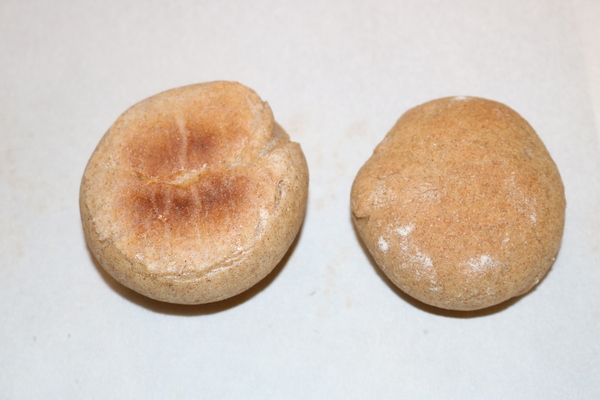
This recipe makes 24 small rolls, about 1 1/4 ounces each after baking (36 grams). They're about 1.75 inches in diameter with a height of about 2/3 of an inch. They would probably make good slider buns if you make your sliders fairly small.
The dough was a little damp, so I wound up adding just a little more rye flour to get it to clean the bowl. They were easy to shape, and rose reasonably well. The bottoms may have gotten a little overbaked, even though I had them on the top rack in the oven, as recommended. Next time I might double sheet pan them.
This is probably the fastest recipe in the Ginsberg book, from start to finish was about 1 hour and 45 minutes. The absence of a bulk rise didn't seem to affect the final product, which was fairly light, though with a tight crumb. I've shown them sliced both horizontally and vertically.
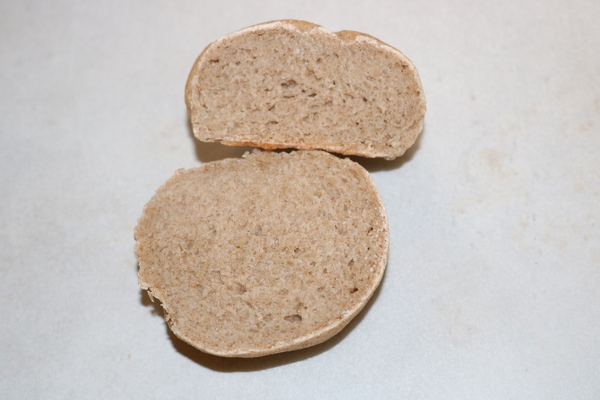
They're a very mild rye roll, maybe almost too mild. A touch of ground caraway might give them a little more zing. I think they'd be good with a little cheese spread on them or with some corned beef; my wife thinks they'd be good with some apple butter. In other words, they're not going to be the star of the dish, but they'll complement a lot of things, making them versatile.
Attachments:
You must be logged in to view attached files.February 8, 2020 at 10:24 am #21097In reply to: Wholegrain Crispbread by Jan Hedh
Lemon zest is pretty light, but I don't think I've ever weighed it.
I've got a scale that measures in tenths of a gram that I use for measuring amounts under 15 grams, and I've got another scale that measures in 0.001 gram increments that I've only used in the kitchen a few times, though that's where I store it. (I used it to measure how much overlap there is in a lattice pie crust for an article on pie crusts I've been working on, inspired by an article PJ Hamel wrote several years ago.)
I have no trouble believing that the anise seed would be a more overpowering odor than baker's ammonia, I use it very sparingly.
February 8, 2020 at 10:09 am #21096In reply to: What are You Baking the Week of February 2, 2020?
I don't remember where I read about using cocoa instead of flour for a chocolate cake, I've been doing it for years, I like that it doesn't mess with the color and it adds just a hint of dark unsweetened cocoa taste to the cake, which helps cut through all the sugar in the frosting. A similar concept is to use sugar instead of flour for a white cake, I think Cass mentioned that back on the old KAF forum some time back.
There are a couple of gluten-free people at my wife's office, so I will often make a larger Texas Chocolate sheet cake (at least 9 x 13) using wheat flour and a smaller one using gluten-free flour, usually with a little xanthan gum. The same frosting goes on both. It is hard to tell the difference between the two just by taste. I think the GF one needs to be baked a few minutes longer.
February 8, 2020 at 9:14 am #21094In reply to: What are You Baking the Week of February 2, 2020?
Thanks for the info, Mike, on the cake. I think your modification of coating pan in cocoa is much better than using flour. I used flour. When I cut two pieces for neighbors, I had to cut off the floury edge before I could take it to them. I compared my stepmother's recipe to the one you use. There are some differences. Below is beloved stepmother's recipe. I don't know where it's from or how old.
TEXAS CHOCOLATE CAKE
2 cups sugar
2 cups flour
2 sticks oleo
4 tablespoons cocoa
1 cup water
1/2 cup buttermilk
2 eggs
1/2 teaspoon cinnamon
1 teaspoon baking soda
1 teaspoon vanillaBlend sugar & flour & set aside. Bring to a boil, oleo, cocoa & butter. Pour over flour & sugar mixture. Add buttermilk, eggs, cinnamon, baking soda & vanilla. Mix well with mixer. Pour into a greased and floured pan. Bake at 360 degrees for 18 to 20 minutes. The last few minutes of baking, prepare the frosting.
As a separate note, she says the pan size should be 17 x 9 x 2", but she always made it in my grandmother's cake pan, which is what I used. It measures 8-1/2 x 13 x 1-1/4". I had just enough frosting for it without it being too thick. I'm thinking, but don't know for sure, that for the larger sized pan, a double batch of frosting may be needed, but that may be too much. Maybe 1-1/2 batch.
TEXAS CAKE FROSTING
Bring to a boil:
4 tablespoons cocoa
1 stick oleo
6 tablespoons milk (she used regular milk, not buttermilk)Remove from heat and add 3 cups confectioner's sugar. Beat with a mixer. Add 1 tablespoon vanilla & a heaping 1 cup of chopped nuts.
Remove cake from oven and pour the hot icing over the hot cake. If this is too thick to spread, add a little more milk.
February 8, 2020 at 12:30 am #21088Topic: Daily Quiz for February 8, 2020
in forum Followups to Daily QuizzesWhat country is Kjötsúpa (lamb soup) from?
[See the full post at: Daily Quiz for February 8, 2020]
February 7, 2020 at 8:54 am #21077In reply to: What are You Baking the Week of February 2, 2020?
I wanted to look up roll recipes in the Wise Encyclopedia of Cookery. I had a baking flop this week and wanted a better recipe. I made Whole Foods Market's Buttermilk Rolls (from Internet). The recipe pictured them as cloverleaf rolls so I made them that way. I had tried cloverleaf rolls once before, and the 3 balls of dough in each muffin cup had fused into one large roll. So I still wanted to replicate the excellent cloverleaf rolls of my beloved stepmother.
The Whole Foods recipe didn't do that. The dough was dry in the mixer. I probably would have thought of adding water, but a workman needed to ask me a question. By the time I got back to the dough, I was in a hurry and used it dry. The rolls did develop the cloverleaf shape, and they weren't doorstops, but they almost were doorstops. Saturated with hot soup, they're good.
The cooking encyclopedia is over 1300 pages, because it has, I believe, every food and everything related to cooking that was known in 1971. With at least one recipe for almost everything, and several recipes for most, with variations. The reason I didn't use the cookbook a lot is that it's so thick it's hard to prop open to read a recipe while cooking it. As I recall, I had to use cans of veggies to hold each side open.
-
This reply was modified 6 years, 2 months ago by
Italiancook.
February 6, 2020 at 9:27 pm #21070In reply to: What are You Cooking the Week of February 2, 2020?
I was planning to make tacos but after dealing with the snow and laundry I lost my ambition so I made a chicken burger (frozen patties) and chicken veggie soup.
February 6, 2020 at 7:48 pm #21064In reply to: What are You Baking the Week of February 2, 2020?
On Thursday, I also tried a new recipe, “Lemon Crispbread with Kamut Flour and Olive Oil, from Jan Hedh’s Swedish Breads and Pastry (pp. 140-141). Instead of cracker-like breads, what I got resembles the thickness of pan pizza. If I were to bake this recipe again, I would divide the dough into three pieces before rolling it out in order to get it as thin as possible. I rolled each half as large as my cookie sheet, which is as large as my oven would take. Perhaps Hedh was using much larger baking pans (a half sheet would be too small) and a larger oven. I did cut the salt from 20g to 12g, but I don’t think that is the issue. I won’t taste them until tomorrow, at which time I’ll know if I think the recipe is worth another try. I
February 6, 2020 at 11:12 am #21060In reply to: What are You Cooking the Week of February 2, 2020?
I roasted some (marinated in italian dressing and a little salt) boneless skinless chicken thighs. I mixed up a little ketchup, A1 and strawberry jam and dipped and topped the thighs with it. Roasted them at 425 along with a separate pan of sliced small potatoes which were brushed with olive oil and sprinkled with Culinary Created Seasoning. The latter is an invention of a community member and sold online. Served with local strawberries (we're in Fl.) and pineapples in a little simple syrup. Will repeat when our company comes.
February 6, 2020 at 9:22 am #21057In reply to: Pizza-Making ?
I've gotten lazy with spaghetti. I take a can of Hunts Traditional or Mushroom sauce (the only two without garlic as a listed ingredient) and I add a can of petite diced tomatoes (no salt added preferred) and a can of mushroom ends and pieces.
If I'm feeling energetic (or hungry) I'll make meatballs and cook them in the sauce first, but it is also good if I just brown some ground beef and throw it in the sauce, and a little less greasy since I drain the ground beef after cooking it.
It is fairly traditional to put a little red wine in marinara, so red wine vinegar actually makes some sense. I don't see that the quantity being used is going to have a material impact on acidity. I like using marjoram in tomato sauces, I think it is an underused and underappreciated spice, and of course I leave out the garlic, but I add onion.
February 6, 2020 at 8:44 am #21052In reply to: Wholegrain Crispbread by Jan Hedh
I can remember--a long time ago before I baked my own bread--seeing small squares of yeast in the grocery store dairy case that were fresh yeast. I wonder if people were indeed using it, even though dry yeast was available.
I won't be jumping on the fresh yeast bandwagon since there are other hard to find ingredients that I already need to order.
It's unfortunate that this cookbook, from a leading Swedish baker, did not get the kind of review before publication that would have made it far more useful. The photography is excellent. I see the breads and want to bake them. Then I look at the recipe and the information is hard to interpret. Perhaps the intended niche was coffee table book, but it could have been so much more.
Google revealed a couple of people who had baked one or two of the recipes, but the issues arise. One person was wondering why her bran bread didn't look like the picture in the book. I checked, and apparently the picture for that bread is on the following page, but no note indicates it. At least for the Barley Crispbread I baked, I was able to find the picture of it on the following page.
The book was translated from Swedish with no effort to consider what an English speaking audience in another country would need to follow it. Cloudberry Salt is a good example. One person in England wondered if a "kneading machine" is a stand mixer and whether the bread could be made without one. I'm not even sure a Swedish audience would know what kinds of flour to use, and certainly not indicating whether a particular recipe uses fresh or dry yeast (and the problem arises with more than one recipe) would be a problem for a baker in any country.
I understand that the book is aimed at experienced bakers, but more information and context is needed. I still hope to try baking some of the breads. We'll see how the new crispbread recipe goes.
February 6, 2020 at 12:30 am #21044Topic: Daily Quiz for February 6, 2020
in forum Followups to Daily QuizzesWhat type of potato (starchy, waxy or all-purpose) is a Russet potato?
[See the full post at: Daily Quiz for February 6, 2020]
February 5, 2020 at 5:24 pm #21035In reply to: Pizza-Making ?
Thanks for the link to Pizza Quest. I'm looking at his easy sauce. Have you tried it (sans garlic of course). It seems as if it would be pretty acidic.
February 5, 2020 at 4:44 pm #21034In reply to: Wholegrain Crispbread by Jan Hedh
I have another recipe from Jan Hedh's book to try: "Lemon Crispbread with Kamut Flour and Olive Oil (pp.146-147). When I saw 50g of yeast, I knew that did not seem right. I re-read the introduction on yeast, and he goes over the several kinds and says that fresh yeast is his favorite. He is a professional baker. I looked through the recipes in the book, and it seems to me that some of them, given the large amount of yeast (50g is about 4 Tbs.) appear to use fresh yeast, while others, like the Barley Crispbread I describe above, appear to use active dry yeast.
I wrote to the book publisher again and received a nice reply:
"Yes, 4 Tbs. would be a lot of active dry yeast, particularly for a crisp bread! I believe your hunch is correct, and that the recipe is assuming you’re using fresh yeast. On page 23, the author mentions he prefers fresh yeast because it yields better results, but that certainly should have been noted in each recipe where it applies. Apologies, again!
I hope the crispbread is delicious—it sounds it!"
If I keep baking from this book, I should be able to help them develop an errata sheet.
-
This reply was modified 6 years, 2 months ago by
-
AuthorSearch Results


