Search Results for ‘(“C’
-
Search Results
-
Today I had a great desire for cinnamon swirl bread. I do not have a go-to recipe, since I do not bake it that often. I ended up at the KAF site and selected P.J.'s recipe because I've always like the way she talks to the baking community. She is one of us, Of course, I played with the recipe, substituting in some oats and white whole wheat flour, a tablespoon of flax meal, and of course buttermilk, which meant deleting the special dried milk. I was a bit rushed, so I may not have let the second rise go quite long enough, but it is a respectable looking loaf from the outside. The test will be when I cut into it tomorrow morning--a breakfast that I am anticipating. I will report back on taste and texture then.
Addendum: The good news is that the swirl mostly stayed together, at least as far as I've cut into the bread. The filling was made by sprinkling a tablespoon of cinnamon, mixed with a tablespoon of sugar. I then drizzled water over it, which is something I learned from a Bernard Clayton recipe (a wonderful orange-cinnamon bread). He misted it with water, but my spray bottle is back in Texas, and thus the drizzle. What is disappointing is that there is not much cinnamon flavor, even when I toast the bread. If I make this recipe again, then I will either double the filling, or maybe use the cinnamon filling from the KAF wholegrain baking book's Dark and Dangerous Cinnamon Buns.
In the meantime, I thought that I would ask community members: What is your go-to recipe for cinnamon-swirl bread? What do you think makes a great cinnamon-swirl loaf?
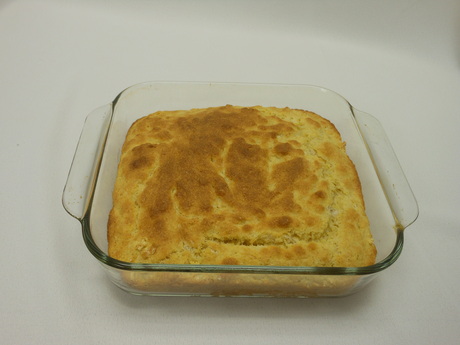
Topic: Gluten-Free Cornbread
This is my version of a recipe I found on the Gluten-Free-Girl site, but I've changed it a little. It's changed several times on that site, too.
We like it better than the kind made with wheat flour, so this has become our standard cornbread recipe. It is great with maple syrup. You could probably use 1 cup of any gluten-free flour mix instead of the first four ingredients; most mixes already have some xanthan gum in them, but usually not enough, so I'd cut the xanthan gum to 1/2 teaspoon.
1/4 cup sweet rice flour
1/4 cup potato starch
1/4 cup sorghum flour
1/4 cup tapioca starch
1/3 cup sugar
4 teaspoons baking powder
3/4 teaspoon salt
1 teaspoon xanthan gum2 ounces shortening (by weight), a little over 1/4 cup
2 large eggs
1 cup milk
1 cup yellow corn mealGrease an 8x8 glass pan. Preheat oven to 400 degrees. (If using a metal pan, set oven to 425.)
Mix dry ingredients except corn meal, then cut in shortening until you have mostly pea-sized pieces. (I usually do it with a fork.)
Add the eggs and milk and stir with a spatula until mostly mixed--do not overmix!
Add corn meal and stir with a spatula until mostly mixed in--do not overmix!
Pour in pan and bake for 25 minutes or until top is mostly brown.
This recipe works well with blueberries. I put half of the batter in the pan, put in 1/2 cup or more of blueberries, then spread the rest of the batter on top. Increase baking time by 2-3 minutes.
This cornbread will keep 2-3 days.
To use it for gluten-free stuffing, I use only 2 tablespoons of sugar. I cut it into 1 inch cubes and let it dry overnight.
-
This topic was modified 9 years, 10 months ago by
.
-
This topic was modified 9 years, 10 months ago by
-
This topic was modified 9 years, 10 months ago by
-
This topic was modified 9 years, 10 months ago by
-
This topic was modified 9 years, 10 months ago by
-
This topic was modified 9 years, 10 months ago by
-
This topic was modified 9 years, 10 months ago by
-
This topic was modified 9 years, 10 months ago by
-
This topic was modified 9 years, 10 months ago by
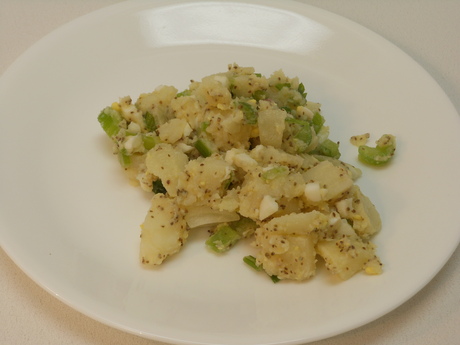
Topic: Memorial Day Potato Salad
This is the potato salad my mother always made for summer holidays. I guess it's sort of like a German potato salad, but I can't say I've ever had a German potato salad that tastes quite like this one. It gets better as it ages, I usually make it the day before I want to eat it and refrigerate it overnight.
2 1/2 pounds red potatoes
3 hard boiled eggs
1/8 cup celery seed
1-2 teaspoons celery salt (or to taste)
1/4 teaspoon pepper (or to taste)
4-5 ribs of celery
1/2 small onion
1/2 cup oil
1/8 cup vinegar (tarragon red wine vinegar works well, and lately I've been using celery vinegar)Peel potatoes, cube them into slices or pieces about 3/8" square and cook them until they are cooked through. (If you start by bringing the water up to 130-140 degrees and letting them sit in the hot water for 20-30 minutes, then turn up the heat to finish cooking them, they won't get as mushy on the outside. However, I think this potato salad is best when the potatoes are a bit overcooked and slightly mushy. To me, that's when it tastes 'right'.)
Mix oil and vinegar together. Drain potatoes, put them in a large bowl and dump the vinegar/oil mixture on them while the potatoes are still hot. Stir to mix.
Dice celery, hard boiled eggs and onion. Add to potatoes. Add salt, pepper and celery seed. Stir again, then refrigerate for at least 2 hours, overnight is better.
Serve cold.
Topic: Rye Bread
This is my version of rye bread. In my opinion rye needs a sponge or starter, so you have to plan ahead but don't let that intimidate you, this is really pretty easy. When making buns I like the dough to be just a little wetter than when making a loaf. I make it using my stand mixer so that is how my instructions are.
Sponge
By weight, 7.5 ounces of medium or dark rye (ex. KAF Pumpernickel) or a mix of the two.
1.25 teaspoons of yeast
10.5 ounces of water, warm (if you're measuring by volume, that would be 10 ounces and one tablespoon)
Mix then cover and let ferment a minimum of overnight or up to three days at room temperature. Helpful tip, do this in the bowl that you will be mixing up the bread in to save the step of having to transfer it.
.................................................
After the sponge has fermented for the required time, add the following
1 teaspoon salt (or up to 1 1/2 tsp)
By weight, 2 ounces Whole Wheat flour
8 ounces Bread Flour
(if you prefer, you can just use 10 ounces Bread Flour)
2 tablespoons Honey or Molasses
2 tablespoons Oil(I use olive oil but you can use any oil you prefer, melted butter or shortening)
Optional, 2 level tablespoons Vital Wheat Gluten...............................
Mix until it forms a dough, cover and let rest for 20 minutes (the rest time allows for full hydration and is beneficial)
Knead for 5 minutes, cover and let rest for 10 minutes. At this point the dough might appear to be too wet, avoid the temptation to add more flour, let time do it's magic and hydrate the grain.
Knead for 5 more minutes, if the dough still appears to be too wet, let rest another ten minutes and knead again for a couple of minutes.
Lightly oil your hands and form the dough into the shape you like (free form loaf, loaf pan or buns). Cover and let rise for about an hour (use your judgement).
While the dough is rising, preheat oven to 375.
Brush with an egg wash if desired. If baking a loaf, slash top right before putting in oven. Bake for about 40 minutes (ovens and bakeware vary so use your judgment).
If baking buns, bake for about 16 minutes.Remove from oven and let cool on a rack.
Tuesday was a busy baking day in preparation for traveling on Wednesday and Thursday. I baked my version of Moomie's buns as nine large rolls. I baked the KAF Christmas Scones, substituting in buttermilk, mixed dried fruit, and some whole wheat pastry flour. I baked two batches of the KAF sourdough crackers--one with cheese powder and one with Penzey's Buttermilk Ranch dressing. On Saturday afternoon, I baked Oatmeal-Chocolate Chip Cookies, since we have an invitation from friends to join their family for hamburgers and hotdogs tonight. I've been working on perfecting my cookie recipe. This time I used part bread flour, part KAF all-purpose flour, part white whole wheat flour, and some ground flax meal. I'm pleased with the cookies warm from the oven. (Who wouldn't be?) I will see how their texture is when cooled.
Topic: Kitchenaid Pasta Experience
I gave my Kitchenaid pasta attachments their maiden voyage today. I used Giuliano Bugialli's recipe for Tagliatelle al Peperoncino (Red Pepper Tagliatelle). Two eggs netted almost 1 pound. I used AP flour, but was unhappy with the way the dough did not come together mixing it in the Kitchenaid. The dough was so crumbly I had to add water. Water is not one of the ingredients in the recipe. In addition, when I was making Bugialli's pastas by hand, I never had to add water. So I really don't know what gives, but I'm going to mix my pasta by hand from now on. Plus, using the mixer added a bowl and, in today's case, 2 beaters to be rinsed and washed.
I'm never certain which is thicker -- tagliatelle or fettucine, but I rolled the dough thinner than I would have for fettucine and called it tagliatelle when I cut it with the fettucine cutter.
I ground the 2 teaspoons of red pepper flakes in the mini-processer a few swirls. Recipe says to use a mortar and pestle, but I don't own one. The seeds did not grind up, but the Kitchenaid cutter did a great job cutting.
I created more work for myself than needed. I had purchased a pasta dryer even though years ago, I always dried the pasta flat on lightly floured surface. It was a lot of work putting the pasta on the dryer rods and spreading apart the pasta. The rack held my pound of pasta, but it would not have held more. Mike and others, how do you dry your pasta?
I put the dried pasta in a plastic bag and refrigerated for dinner tonight. The sauce he recommends is straightforward with only parsley leaves and olive oil. So even though my feet hurt from 3 hours of standing, I'll have an easy dinner.
Mike, thanks so much for your tip about rolling out smaller amounts of dough so they don't become too long. That helped a lot. I don't have much counter space. I put kitchen towels with flour on the stovetop and the smaller portions of dough fit just fine when rolled out.
Now that I've made pasta once in this kitchen and accustomed myself to the electric pasta attachments, I'm sure my next pasta-making will go much faster. Today, I climbed the learning curve.
I have a large, square plastic cake holder that I love. It was made in Germany, and the brand, I think, is Emsa (hard to read whether it is an "s," a "y," or a "j"). Back in March, when we visited Indiana, it held the last half of my husband's wonderful chocolate cake that I had made. He was supposed to pick it up from the counter and put it in the truck. (I was taking care of the dog.). An hour into the trip home, he realized that he had left it, but he was not willing to go back for it. Our contractor, who has a key, was supposed to go get it and eat it. He forgot. When we arrived last evening, there it was, still in the holder. The cake has a lot of mold on it. It does not seem to be on the container. Here's my question: Is it possible to sanitize the plastic holder so that I will be able to use it again? It is perfect for holding two loaves of bread while they are rising, so I would hate to lose it, and I don't think I can find another one. (It was from T.J. Maxx maybe six or seven years ago.)
-
This topic was modified 9 years, 10 months ago by


