Search Results for ‘(“C’
-
AuthorSearch Results
-
February 15, 2020 at 8:57 am #21308
In reply to: Aricle about biscuit making and the South
There are a lot of confusing and similar terms thrown around:
Corn flour, corn meal and corns tarch
Potato starch and potato flour (I don't think I've ever seen anything labeled as potato meal.)
To me, a 'meal' implies that it is a whole grain product, though there's no guarantee that's how a specific product defines it. But to me corn meal would include more of the outer layer and germ of the corn kernel than corn flour, although Google says the major difference is how finely it has been ground. Corn starch is more of a purified starch from the endosperm.
February 14, 2020 at 10:59 pm #21297In reply to: Coming Through the Rye
Report on Old School Deli Rye (Ginsberg pps 80-82):
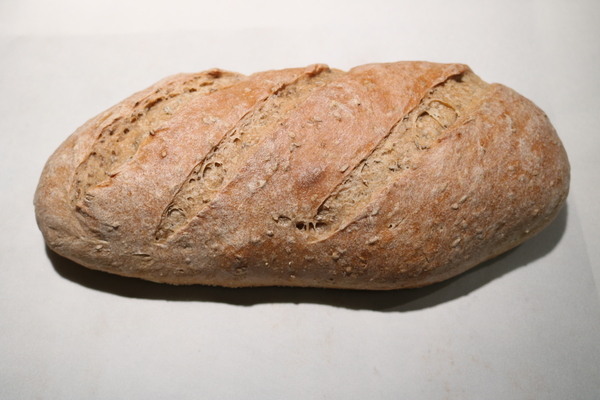
The recipe appears to have some timing issues, it says to make the stage 1 sponge in the morning of the first day, then make the stage 2 sponge 12 hours later, in the afternoon, and bake about 6 hours later on day 2. I think stage 1 should be in the evening of day 1, stage 2 in the morning of day 2 and the final dough and baking in the afternoon of day 2.
It makes two loaves that I shaped as more of a batard than the football shape recommended in the text, they were 10 x 5 x 2 1/2 inches and weighed around 660 grams each (23 1/4 ounces). (My shaping method produces more slices that are similar in size, which I think is better for sandwiches.)
The dough seemed a bit softer than I expected at final shaping, though it rose reasonably well a stretch-and-fold might have tightened the dough and improved the height a little.
I think they could have been baked a little longer, the slice shows some dark areas that are areas of moisture that a little more time in the oven might have eliminated.
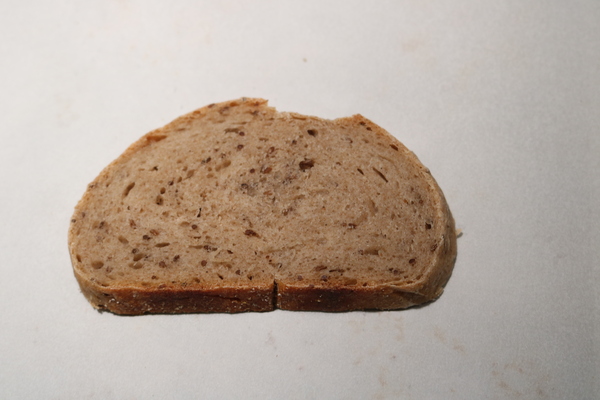
This recipe uses a cornstarch wash put on right after baking. I've never been a fan of cornstarch as a wash for bread, but it does not appear to have a major impact on this recipe.
The recipe uses both caraway seed and ground caraway, and they add a slight bitterness to the bread, but we like caraway in rye breads.
So far this is the best tasting loaf I've made out of the Ginsberg book, it lives up to the promise of being a New York deli-style rye. It toasts very well. I could see this bread making good Reubens, and it is likely to become part of the repertoire here.
Attachments:
You must be logged in to view attached files.February 14, 2020 at 10:30 pm #21293In reply to: Aricle about biscuit making and the South
Whole meal barley flour is similar to AP flour in protein content, around 10.5% protein, though I believe the type of gluten it has isn't as strong as the gluten in wheat. Flour made from pearled barley (removing the bran) is lower in protein and I think that would make it softer.
I think barley is a bit higher in diastatic enzymes than wheat, but maybe that's only after it has been malted.
I think barley has a sweeter taste than wheat.
February 14, 2020 at 9:49 pm #21289In reply to: What are you Cooking the week of February 9, 2020?
CI said it contacted the recipe's author, who states that the time (35 min!) and temperature (250F) is correct. The recipe is a braise, as the browned roast sits in 4 cups of chicken broth, with 1 cup of barley. The covered heavy Dutch oven--in my case a 5 1/2 qt. Le Creuset--sits on the bottom rack of the oven. I think it's supposed to be a slow cooker approach. I let the roast sit out a bit before I began browning it. I boiled the broth before adding it, then brought it and the barley to a boil before adding the roast. I even put the piece of foil between the lid and the pan. After 45 minutes, I had a reading of only around 109. I was looking for 135F, as it will rise to 145 while sitting on a platter covered for 15 minutes.
I agree that the roasting temperature is just too low. When I make it again (the taste is wonderful), I will set the oven to 325F. I'd like to get the timing figured out, so that I can use it as a company dish with confidence that it will be done around the expected time.
-
This reply was modified 6 years, 2 months ago by
BakerAunt.
February 14, 2020 at 9:39 pm #21288In reply to: What are You Baking the Week of February 9, 2020?
For dessert on Valentine’s day, I baked a Chocolate Heart Cake, using a La Forme pan from Kaiser Backform (Heart Flan Pan) that I bought some years ago and had only used once before. The beauty of being retired is that I have time to celebrate the holidays. One of the recipes that came with the pan is “Chocolate Strawberry Heart.” I was delighted that it did not use butter, only ¼ cup oil and ½ cup buttermilk. It also uses coffee liquor, and I still have a partial bottle of Kahlua. I used the Grease on the pan. At first, I was unsure if it was going to release, but I rapped the rack with the inverted pan on top on the counter, and it came out beautifully. The plan was to make a filling with fresh strawberries and glaze. However, dinner took so long, I didn’t get that done, so I came up with a Plan B. I mixed up 1 ½ recipes of the glaze I used earlier this week. I spread it in the center of the heart, pushing it up along the sides. I felt it needed something, so I rummaged through my stash and found some large crystal red sugar, which I sprinkled on it. The cake is more like a kind of brownie, which worked well with the glaze. We both liked it, and of course my husband had a second piece, oblivious to the Kahlua.
I have a heart-shaped platter--from King Arthur years ago--and the Kaiser heart fits on it perfectly.
-
This reply was modified 6 years, 2 months ago by
February 14, 2020 at 8:11 pm #21287In reply to: What are you Cooking the week of February 9, 2020?
I looked at a number of recipes and none of them cook pork loin at 250F, the lowest temperature I found was 325F. I wonder if they meant 350?
At 325, the chart says 25 minutes per pound. It'd be a little faster at 350.
I've been trying to come up with a quiz question that deals with temperature/time adjustments, but the math on that is not very simple and other factors (like Maillard reaction and caramelization) can be affected by the cooking temperature.
If you sous vide something, you get almost no Maillard reaction, so a lot of the recipes for sous vide meat have you brown the outside in a hot pan for a few minutes before serving.
BTW, about 10 years ago the USDA finally accepted what chefs had known for a while and lowered the recommended target temperature for pork from 160F to 145F. Today's pork is a lot more lean than it was 40-50 years ago, so it doesn't do well when cooked to higher temperatures, it dries out and gets tough.
February 14, 2020 at 6:26 pm #21283In reply to: What are you Cooking the week of February 9, 2020?
Skirt steak comes from the short plate primal cut and consists of the diaphragm muscles of the animal. Flank comes from the flank primal cut which is just behind the short plate primal cut and in front of the round primal cut. Inner skirt steak meat is not quite as tough as the outer skirt meat, which often comes with the membrane still attached. It should be removed before cooking. Flank is not quite as tough as inner skirt steak, but still benefits from a low slow cooking method.
Both are often sold as fajita meat. Sometimes you'll see flank labeled as 'London Broil', but that's also how some portions of the Round primal (top round) are occasionally labeled, so it is hard to be sure.
February 14, 2020 at 5:05 pm #21281In reply to: What are you Cooking the week of February 9, 2020?
I used Melissa D'Arabian's (Food Network) recipe for skirt steak, and we all enjoyed it. I wasn't sure of the difference between skirt steak and flank steak, so I looked online. According to kitchen.com, there is a difference, but they can usually be used interchangeably in recipes. Below is the link to Melissa's recipe that I used, French Cut Steak. Maybe it would work with flank steak.
https://www.foodnetwork.com/recipes/melissa-darabian/french-cut-steak-recipe-1949683
February 14, 2020 at 4:20 pm #21279In reply to: What are you Cooking the week of February 9, 2020?
Most types of marinade won't tenderize beef, unless they're pretty high in acid. (Think sauerbraten.) Also, the marinade isn't going to get very far into the meat, maybe a quarter inch.
Low slow cooking, preferably in liquid (ie, braising) is usually the best way to tenderize tough meats.
February 14, 2020 at 3:02 pm #21276In reply to: Aricle about biscuit making and the South
Thanks Mike. So just based on protein content (glutenin vs. gliadin aside) pastry flour is soft like self-rising but doesn't have the leavening or salt.
February 14, 2020 at 2:32 pm #21275In reply to: Aricle about biscuit making and the South
Low gluten and soft are essentially the same thing. The higher the gluten content, the 'harder' the flour is, and vice-versa.
The ratio of glutenin to gliadin also impacts how a flour performs, but that's not information you'll find on any flour bag I've ever seen. (Glutenin give dough strength, ie, elasticity, gliadin gives it flexibility, ie, extensibility.)
The ratio really depends on the specific types and varieties of wheat used. All-purpose flour is generally a mixture of several types of flour.
February 14, 2020 at 11:10 am #21267In reply to: What are You Baking the Week of February 9, 2020?
I made a Texas Chocolate Cake for my computer tech. Normally, I make him (and his colleagues) Double Chocolate Brownies, but I still haven't purchased chocolate chips. Nevertheless, they have a good snack. Making the cake this time was easier than the one I posted about recently. I measured everything for the frosting before I started the cake. That made the frosting less time-crunched to make. But I started cooking the frosting too soon. Partly, because the caked needed 4 extra minutes baking time. Partly, because I was unsure of how much time it'd take. The frosting was on the stove too long, and I think too much water from the milk and butter evaporated. The frosting was thicker than last time. I was in a hurry to get cake done and cooled, so I used the thicker frosting. I'm sure I'm the only one who knows the difference. My husband has eaten what I didn't give the tech, and he hasn't complained.
-
This reply was modified 6 years, 2 months ago by
Italiancook.
February 14, 2020 at 7:54 am #21262In reply to: What are You Baking the Week of February 9, 2020?
I have limes from my lime tree in the refrigerator. A recipe that I miss is Lime Pecan Cookies; the amount of butter is prohibitive. On Thursday, I decided to take a recipe that I have for Lemon Walnut Biscotti (from Bon Appetit April 2005, p. 119), replace the lemon with lime, and replace the butter with a mixture of oil and buttermilk. I added 3 tbs. Bob’s Red Mill Milk powder and used pecans rather than walnuts. I also used half AP flour and half white whole wheat. I refrigerated the shaped rolls for an hour before baking. I decided not to use an egg wash; instead I spritzed with water and sprinkled with demerara sugar. I had a taste of one this morning, and I do taste the lime. While they will never be the same as the recipe with 10 Tbs. butter, these will be nice to have with tea or coffee.
February 13, 2020 at 6:54 pm #21255In reply to: What are you Cooking the week of February 9, 2020?
We had Hirtensuppe, a German beef stew. It's has less common flavors: vinegar (to tenderize the meat), caraway, paprika, and garlic.
February 12, 2020 at 8:11 pm #21242In reply to: What are you Cooking the week of February 9, 2020?
Cucumber beetles are a problem for me too, but later in the season. The deer love beans, but I put up an electric fence this year. I grow lots of things, but less since we don't have kids living at home. Lettuces, spinach, kale and other greens, green and yellow beans, carrots, beets, onions, red, white, yellow potatoes, about 10 hills of each, 6-36 tomato plants, 6-12 bell peppers plus 1-2 hot peppers, eggplant some years, cucumber, zuchinni, summer squash, acorn, butternut, buttercup squash, (about 12 plants each of the winter squash), peas some years, 6 each of cabbage, broccoli, brussel sprouts, cauliflower, watermelon and/or cantaloupe some years. No corn - you know why! The deer favorites are inside the electric fence; around the outside perimeter of the fence is a "second defense" of things they don't really care for most of the time, and around that plants that smell really bad to them or are prickly, spiney irritations. I'm planning to cut back more this year, and also try a lot of things in waist high planter on the deck. Gardening has been my life for 35 summers, sometimes 10 hours a day. I can't just stop.
-
This reply was modified 6 years, 2 months ago by
-
AuthorSearch Results


