Forum Replies Created
-
AuthorPosts
-
We had hot ham and cheese sandwiches, some of the eggplant lasagna, and some Otis Spunkmeyer frozen dough cookies that we bought at a neighbor's kids fundraising sale. The cookies probably needed another minute or two in the oven.
My wife can't take the egg-cultured flu shots, but fortunately there are other options these days.
We got our latest COVID boosters on Monday, I had a sore arm for about 48 hours but it is fine now. Sorry you're having bigger problems again.
I was able to grow spinach in the Aerogarden, but unlike leaf lettuce it does not seem to work well with the 'thin and return' method, you get one or maybe a few pickings of leaves but that's about it.
If I wanted to grow spinach on a regular basis, I'd probably set up a different type of hydroponics garden, one designed to grow a crop and be replanted as it is harvested. That would probably work better for head lettuce too, the spacing of the pods in the Aerogarden is too close together for head lettuce, they need to be 6-10 inches apart.
Spinach should grow in a greenhouse environment during the winter, and it actually grows better at cooler temperatures, so your covered porch might work if it gets enough sun and doesn't get TOO cold.
If I was redesigning our house, I think I'd plan on a solarium or greenhouse coming off the first floor guest bedroom, the front of the house faces south so there's really no good place for a greenhouse behind the house.
As it is, the south third or so of the bedroom has been where my wife keeps some of her plants and where we had the Aerogarden at first, so unless someone's staying in that room it comes close to being a solarium anyway. But having a separate room would make it easier to manage and more convenient for someone staying in that room, having the window shades up and/or grow lights that come on at dawn makes it hard to keep the room dark for sleeping.
We moved the Aerogarden downstairs because having it in a south-facing window meant it was getting too hot at times. Now it is in the NE corner of our walk-out basement.
I found out what type of lettuce the curly lettuce my wife got from the hydroponics teacher at UNL was (picture upthread):
Salanova® Hydroponic Green Sweet Crisp, available at Johnny's Seeds.
It does not appear to keep in the refrigerator well, it wilted faster than UK Prime Minister Liz Truss (who was compared to a head of lettuce by the British press--the lettuce won.)
I've ordered a small amount (25 seeds for $6.70 plus shipping) of them to test in the Aerogarden, along with some hydroponic-ready butter crunch lettuce and some snow peas.
We bought a big rosemary pot at Costco a couple of years ago and have managed to keep it going through at least one winter, usually taking it outside in June once the danger of frost is past, then bringing it back inside in late September or early October ahead of the first forecasted frost.
We keep it in a south-facing bedroom window in the winter and try to make sure it is watered every week or two. I think the main reasons we've lost rosemary plants over the winter in the past is because they weren't getting enough sun and because they were either over-watered or under-watered, more likely the latter due to being forgotten about.
We did transplant it into a bigger pot soon after we bought it and it has flourished well both indoors and on the back patio.
I think my wife's sister still has a big rosemary plant that she's kept going for a long time, but she's a much more serious gardener than either of us, and has even published a book on gardening in hot weather.
The only vegetables we still have outside are some leeks we planted in a pot, I may pull them this weekend. Some of the flowers still look like they're blooming, but I don't think they're annuals. The rosemary pot is in the garage, I'll move it inside soon, I'm waiting to make sure there aren't a lot of bugs on it.
I read an article online recently on how to keep rosemary alive indoors, one of the things they suggested for powdery mildew (which it had a major case of last spring just before we took it outside for the summer) is to have a fan on it to keep the plant less humid. I may set up a small fan on a timer in that bedroom, if it runs an hour or two a day that's probably plenty.
I haven't ordered from King Arthur's store in several years. I did recent buy a container of King Arthur diastatic malt powder, but I bought it through Amazon. I may need high heat-treated milk powder soon, not sure if I have more of it in the freezer, but I'll probably order it from some other supplier.
Their website is a bit vague on some things.
I tend to assume if a flour isn't marked as 'stone ground', it isn't stone ground.
It would be nice if the milling industry would adopt some standard conventions, like saying something is 'whole meal' if it is never separated into component streams (endosperm, bran, germ) like it is in a modern steel roller mill. As far as I know, stone-ground products are not separated into component streams, so maybe 'stone ground' and 'whole meal' are very similar terms.
Stone grinding is not, however, the only way to create whole meal flours, impact or hammer mills don't separate out the bran or germ, either. And even a simple one-stage steel roller mill would product whole-meal output.
I've recently seen some research that says recombined whole grain flours are enough different from whole meal (never separated) products to have an impact on things like glycemic index.
I've never really looked into how barley is milled, I know it has a much more substantial hull than most wheat and wheat-related grains do, but that's true of some other cereal grains as well. I also don't know what the shape of an individual barley kernel is; a wheat berry has a crease in it that complicates the milling process.
We had ham steak with pineapple and a salad. An old-fashioned meal for an old-fashioned couple. ๐
Back when we used to get semolina bread from McGinnis Sisters in the Pittsburgh area (a local chain now closed), I saved an ingredients label.
The ingredients were: enriched durum flour, enriched semolina flour, unbleached enriched flour with less than 2% of the following: rice flour, salt, sesame seeds, malt syrup and yeast.
I can't be sure, but it is possible that the rice flour was used primarily for dusting underneath the dough before baking. I've seen other recipes do that, rice flour apparently doesn't scorch as easily as wheat flour in a hot oven. I generally use corn meal for that.
No oil, so maybe this week's omission was worth repeating.
I don't currently have any durum flour on hand, which is why I've been using 62.5% semolina in Hamelman's recipe for the past year or so.
I may have to try using malt syrup instead of sugar in the flying sponge in Hamelman's recipe.
I use the one in Jeffrey Hamelman's book. I just looked at several semolina bread recipes on the King Arthur site, didn't see that one there but I might have missed it. It starts by making a 'flying sponge' with a bit under half of the flours, water, a little sugar and the yeast. You let that sit for about 90 minutes then add the rest of the flour, more water, oil and salt.
This appears to be close to the recipe in the book:http://fortheloveofbread.blogspot.com/2009/06/hamelmans-semolina-bread.html
The only changes I've made are that I use 20 ounces of semolina and 12 ounces of bread flour to make up the 2 pounds of flour. (That's 62.5% semolina, the original recipe is 50-50.) I also use regular oil rather than olive oil. (For the last year or two I've been using a blend of canola and soybean oil.)
I left the oil out of this week's batch. (Just got distracted and forgot it.) It came out a bit more dense than it usually does, how much of that was the missing oil and how much of it was the cooler weather is hard to say.
Tonight we had some chili from the freezer, a warm dinner on a cold evening,
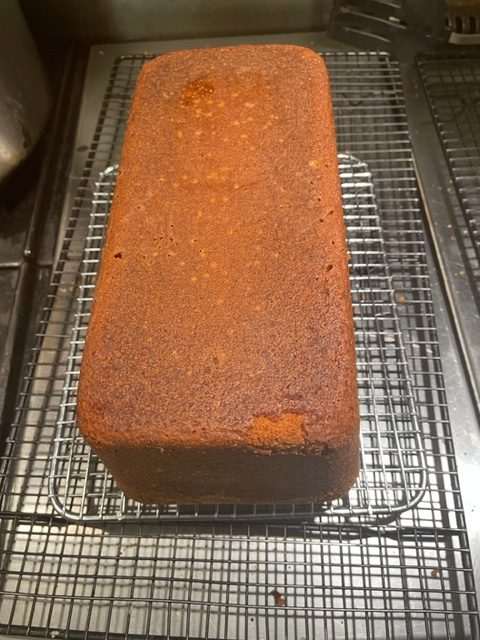
Last night's semolina bread. I left the oil out of the dough by mistake, and that affected how much it rose, so it is a bit more dense than usual, but still tastes pretty good.
Attachments:
You must be logged in to view attached files.I haven't grown brandywine tomatoes for several years. IMHO, they need HOT weather to be flavorful, so you need to get them started as soon as possible so they can set fruit before the hot weather arrives, because they won't set much fruit during the hot part of the summer. In August they're pretty good, but after early September, they're more bland and other varieties are better for after the cooler weather sets in.
Also, they crack a lot and you wind up cutting the shoulders off. I think they're harder to peel, too.
-
AuthorPosts