On Thursday, I again tried baking the Polenta Asiago Bread, from Sift (Fall 2015), p.69. This time, instead of course-ground corn meal, I had polenta (corn grits) from Bob's Red Mill. The polenta definitely cooks to a different consistency from the course ground corn meal, and I now believe it is essential to this recipe. I initially held back half the water, but it seemed dry enough that I went ahead and put it all in. Kid Pizza had suggested to me that I also hold back the oil initially as it can interfere with gluten development. I waited until 13 minutes into the 30-minute cycle to add it, and I put it mostly around the sides. During one of the bread machine's pauses, I turned the dough over to make sure that it would get incorporated. At the end of the kneading cycle, the dough seemed a tad sticky, so I hand kneaded in another tablespoon of bread flour before letting it rise. The rise took longer, as the house is cooler than usual today, but the dough rose well. I easily divided it into three pieces, which I formed into long rolls, and I let it rest covered for 10 minutes (usually a good idea with bread flour). I then braided it and placed it in a greased 9x5 inch loaf pan to rise for 45 minutes. The pan looked a little large for the dough. Due to the coolness of the house, I gave it an additional 15 minutes as a warmer location. It did not rise as high as the rim of my baking pan. I baked it for 35 minutes to a temperature of 198F. It did not have much additional oven spring. I think that the polenta is heavier the course grain corn meal, and that held back the rise; on the positive side, it did not collapse. Taste Note: The texture has less of the larger holes. I still prefer it toasted.
So, coarse-grind cornmeal will produce a wet, hard to handle dough, so if using it (as Sift specifies), hold back some of the water. If using polenta, which the original recipe specifies, the dough can be shaped more easily, but it will not rise as much--and also not collapse. If I were ever to bake this bread again, I would likely try it in an 8x4 inch loaf pan.
Interesting article. I hope some American pizza places take note that a true Margarita (sometimes spelled Margherita) pizza as described by the AVPN code contains just these ingredients:
Dough: Flour, Water, Salt, Yeast
Topping: Tomatoes, Olive Oil, Mozzarella Cheese, Hard Cheese, Salt (if needed), Basil
That means NO garlic!
On Thursday, I again tried baking the Polenta Asiago Bread, from Sift (Fall 2015), p.69. This time, instead of course-ground corn meal, I had polenta (corn grits) from Bob's Red Mill. I'll write a further analysis tomorrow in the thread I started about the recipe.
Here on the lake, we had the season's first snowfall this morning. It was rather light, but it stayed on the ground and sidewalk for a time as it is in the 20s today. It was a perfect day to make Ground Turkey and Black Bean Chili, my adaptation of a recipe from Bon Appetit (April 1993) in the "Cooking for Health," column by Richard Sax and Marie Simmons. It has long been a favorite, and finding a bag of 6 red bell peppers in a bag for 99 cents at the grocery store put it on the list to make this week. My version is milder than the original, as I reduce the chili powder from 4 to 1 tsp. and delete 2 tsp. of cumin. I do add a dash of cayenne. I also use additional broth and add 3/4 cups brown rice. I started it on the kitchen stove, but once all was combined, I put it on the wood stove to simmer for an hour.
My very favorite roasted veggie pan includes: sweet potato, white potato, winter squash (any kind), carrots, parsnips, onions (and I may be missing something; turnip anyone? not at my house!). They are all cut into about the same size pieces, about 1/2" to 1", and in about equal proportions. Some veggies may be a bit softer than others, but not much, hardly noticeable. I just drizzle with olive oil and toss with sea salt. I generally don't use any seasonings, perhaps a fresh rosemary or thyme sprig, preferring to let the flavor of each vegetable shine. I have frozen the leftovers and reheated briefly in a hot oven - not as good as fresh, but quick and easy.
Hi, Cwcdesign:
I re-worked the recipe and posted it here, along with some suggestions about pan sizes:
Eggnog Cake
You are correct that the KAF recipe used cream and the eggnog flavoring KAF sells. (Surprise, surprise.) I replaced those with a cup of eggnog. I've added, in an additional post, my recent changes. The cake also freezes well when double-wrapped in saran. Enjoy!
-
This reply was modified 8 years, 4 months ago by
 BakerAunt.
The recipe I made this evening (see Tuesday under December 3 Cooking thread) called for Swiss chard, which I could not find in the one grocery store in town. Unsurprisingly, they did not have any of those fresh greens such as mustard greens or collard greens. I found frozen collard greens, so I used those.
My question: What is the difference in taste with these greens? My guess was that the recipe wanted a slightly bitter flavor to offset the sweetness of the butternut squash.
-
This topic was modified 8 years, 4 months ago by BakerAunt.
Tuesday morning, I put the bones from the Thanksgiving turkey (they were in the freezer) into a large pot, along with savory spices, some chopped celery, and some parsley, and put it on the wood stove to simmer. Some broth was used in the dinner meal, some is for soup later this week, and some will be frozen.
On Tuesday evening, I tried a new recipe, "One-Pan Pork Loin Roast Dinner," from a recent special collector's edition of Cook's Fall Harvest Recipes, p. 22. The roast cooks in a heavy Dutch oven in the oven, then the meat sits covered while the rest of the vegetables and barley are finished stove top. I was forced to make some substitutions, since the only grocery store in town did not have pearl barley (?!) only quick barley. Less surprisingly, the store did not have Swiss chard--or any fresh slightly bitter greens. I found collard greens in the frozen food section, so that is what I used. I was uncertain about putting the pot on the very lowest oven rack, so I put it on the next lowest. That may have been a mistake, as it added about 40 minutes to the roast's cooking time, but since I did not have the pearl barley, I was worried about the grains sticking. It came out well, albeit perhaps slightly mushy due to using instant rather than pearl barley. I will make it again.
Riverside Len--I have done pan chicken with both regular potatoes and sweet potatoes (not together). They do seem to roast in the same time as long as they are cut to the same size.
Yeah, pizza about once every two weeks is about as frequently as I want it, whether I make it or we order in. (Recently we've been ordering in a thin crust pizza with artichokes, cream cheese and tomato chunks.)
Mostly its a matter of limiting high carbs meals.
I made a small batch of cinnamon rolls today (4 rolls in a 7x7 pan)
Saturday evening, I baked "Butterscotch Apple Sweet Rolls," from Sift (Fall 2015), p. 40.
https://www.kingarthurflour.com/recipes/butterscotch-apple-sweet-rolls-recipe
I used Jonathan apples, which I grated with my food processor. I made three changes: I replaced one of four cups of flour with a cup of white whole wheat flour, I added 2 Tbs. flax meal, and I used the gold yeast, since the rolls had 1/2 cup of sugar, not to mention the 3/4 cup brown sugar in the filling. I mixed the dough in my bread machine. I will add the glaze tomorrow morning.
Added Note: We had these for breakfast this morning. They are excellent. I recommend this recipe.
-
This reply was modified 8 years, 4 months ago by BakerAunt.
I wanted to try another bread with the Emile Henry Glazed Long Covered Baker. The KAF Golden Grains Bread seemed a good place to start, as I have Harvest Grains to use:
https://www.kingarthurflour.com/recipes/golden-grains-bread-recipe
However, I do not have whole-grain improver, and I do not have non-diastatic malt powder, nor do I wish to buy them. I compared the recipe to my version of the Grape Nuts bread recipe in terms of proportions. I decided to modify the KAF Golden Grains Bread by adding honey, using butter instead of oil, adding some malted milk powder and flax meal, substituting half bread flour for half of the AP flour, and reducing the salt by 1/4 tsp. I used a cup of buttermilk and pre-soaked the Harvest Grains Blend for 25 minutes. I made the dough in the bread machine and after 10 minutes, it seemed dry, so I added a tablespoon of water. At first, I worried that I'd added too much, but I ended up with a slightly sticky dough that rose nicely after 1 hour and 45 minutes.
After I had shaped it and let it rise the second time, for baking, I did not use the cold oven technique, but the one from the Honey Spelt Sourdough Bread recipe that I baked a couple of weeks ago:
https://www.kingarthurflour.com/recipes/honey-spelt-sourdough-bread-recipe
The bread was 200F when I took it out of the oven, and it is a beautiful loaf. I will try to get a picture and post it. I had splurged on the black walnut Lame that KAF sells, and this was my first time using it. Wow! Where has it been my whole life? 🙂 It is made by Zatoba (see zatoba.com), which KAF does not tell you, maybe because they charge $10 more for it. (Sigh.) Zatoba has a link to a YouTube video that shows how to insert the blade and to position it. (The KAF picture is misleading.) I was nervous about getting the razor blade inserted without cutting myself, but it was not hard at all.
I look forward to tasting it tomorrow.
-
This reply was modified 8 years, 5 months ago by BakerAunt.
-
This reply was modified 8 years, 5 months ago by BakerAunt.
I decided to divide my pizza dough in thirds and make the pie in an 8 inch cast iron pan. I used a combination of fresh mozzarella and packaged Kraft. The parm was fresh grated. Toppings consisted of mushrooms and sausage. I rolled out the dough fairly thin for deep dish, about the thickness you would expect from a normal style pizza. For the mushrooms, I chopped them up in a food processor then sauteed them (I had the processor out anyway to grate the parm). It came out pretty good although I'm going to make a note on my recipe card to hydrate the dough a little more next time I make it. I had enough for dinner and enough left for tomorrows lunch.
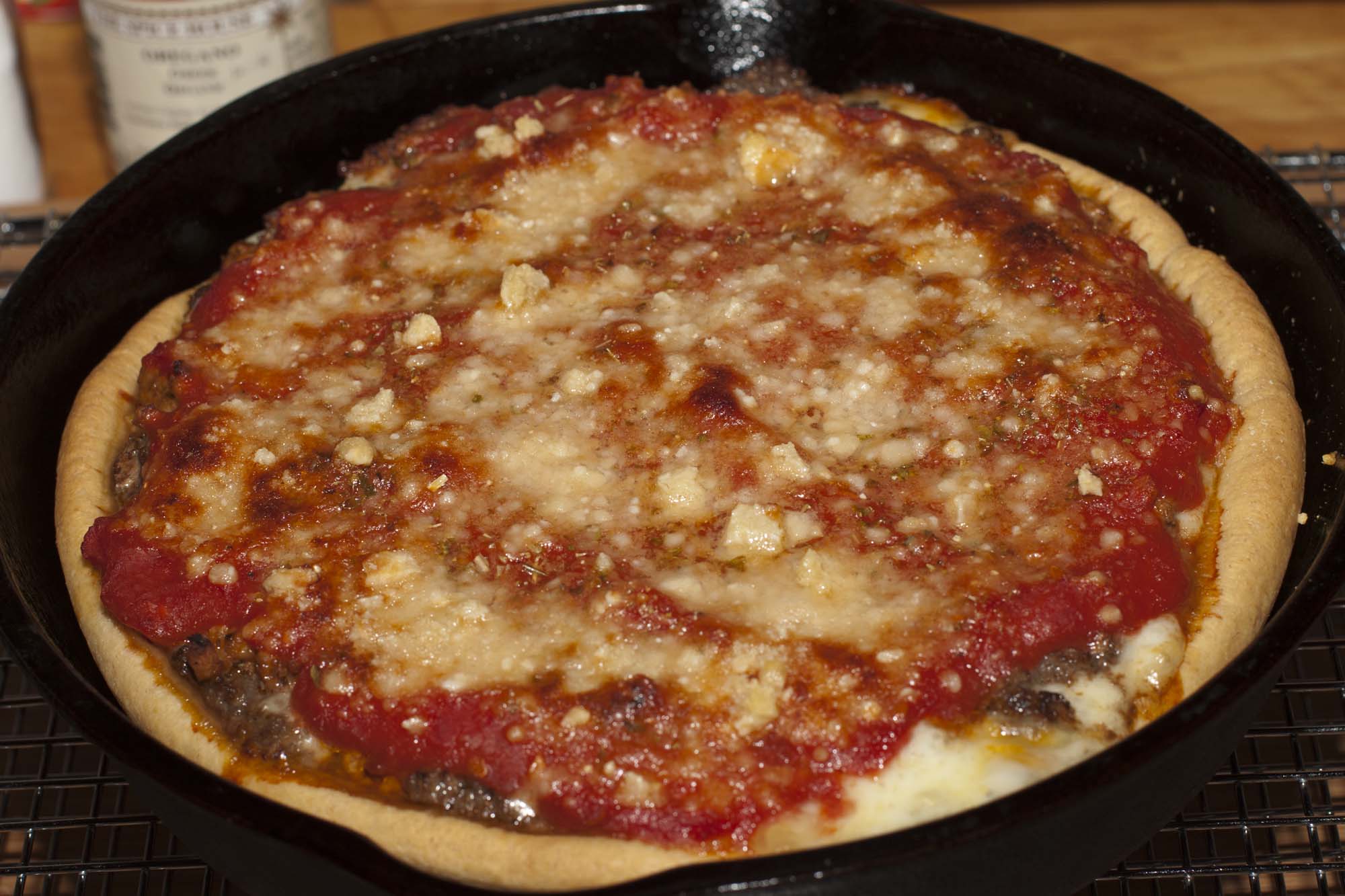
Attachments:
You must be
logged in to view attached files.
Maple Shortbread Cookies
I adapted this recipe from one on the KAF website. It makes about 58 cookies (1 3/4 inch) with dough rolled 1/4-inch thick.
1/4 Cup granulated sugar (50g)
1/2 Cup pure maple sugar (85g)
1 Cup unsalted butter (room temperature)
1 tsp. salt
2 1/4 Cups bleached flour (292g)
Beat together the butter, sugars, and salt until fluffy.
Beat in the flour. It will look like crumbs, but keep beating. At the end, I use a plastic bowl scraper to bring it together into a smooth ball.
Divide dough in half. (I weigh it.) Roll each half out to 1/4-inch thickness on parchment paper with saran wrap on top. Slide the parchment and the saran covered dough onto a cookie sheet, and refrigerate for 15 minutes or so. You want the dough cold enough to hold an imprint, but not so cold that the imprint is hard to make.
Working with half the dough at a time (leave the rest refrigerated), cut the cookies. I have plastic cutters in the shape of maple leaves that have a spring, so that you can push down and make the imprint. The spring also helps release the cookies from the cutter. There are many shapes for these kind of cutters; they are usually sold for pie crusts. Re-roll scraps, and cut again. These will not spread, so I have been able to get 30 on a parchment-lined cookie sheet.
Bake at 350F for 15 minutes. I use heavy baking sheets; lighter ones may need less time. Cookies will be very lightly brown on bottom.
Let cool for a few minutes on the pan, then move to rack to cool. I find that shortbread has the best taste if you wait a day after baking it to start eating it.
-
This topic was modified 8 years, 5 months ago by BakerAunt.
-
This topic was modified 8 years ago by BakerAunt.


