Mike Nolan

Forum Replies Created
-
AuthorPosts
-
The semolina rye bread is a bit on the heavy side, which I expected, but went well with the ham, which was marinated in ginger ale.
I may have to make it without the onion to see what difference it makes.
-
This reply was modified 5 years, 5 months ago by
Mike Nolan.
We had ham on the semolina rye bread, with potatoes au gratin made using the dried potatoes from a package mix but not the sauce mix, for that I made a Mornay sauce and added sour cream. Plus a salad.
This isn't one of the Ginsberg recipes, but I may try it soon anyway.
In place of a double-walled water-filled baking pan, which seems to be impossible to find, it suggests using two Pullman pans, one that fits completely inside the other with the lids on and the outer one filled with water. It bakes at a low temperature for 24 hours.
This recipe might give me an excuse to buy not one but two Pullman pans.
I made the KAF Semolina Rye bread today, not my best shaping effort:
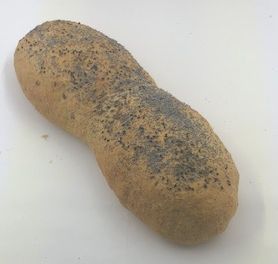
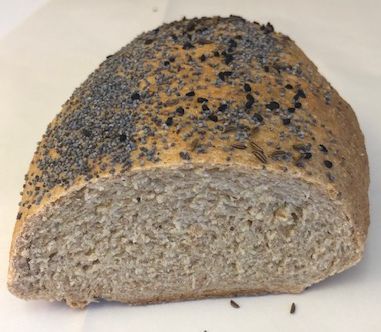
It called for 1 1/2 TB of dried minced onion, but I only put in about a teaspoon and that was PLENTY! The seeds on top are mostly poppy seed with a little caraway and charnushka.
I did put in the extra gluten, and a bit more pumpernickel flour than it called for, since that finished off the bag.
Attachments:
You must be logged in to view attached files.Conspicuously absent is how much he spent outfitting the AirStream, which, I will agree, is/was a wonderful trailer.
My older son recently bought a used Class C RV, he's already taken it on a short shakedown cruise from Pittsburgh to Maryland, we're hoping he'll use it to come visit us later this year, perhaps at Christmas.
Nice donuts.
It is supposed to be cooler here tomorrow, I'm hoping I can get some baking done, probably some kind of rye bread as I've got some ham I want to bake.
I've used shortbread as the base for an apple galette, though I haven't made it in a long time. (These days I prefer the Irish Apple Cake.)
Shortbread isn't hard to make, have you tried making your own?
Guavas are rather tart, which is why they make great jams and jellies, lots of pectin.
One of my wife's sorority sisters married a guy whose father was a food chemist. He achieved some notoriety in the early 60's by publishing a list of Kentucky Fried Chicken's '13 secret herbs and spices'.
We made one batch of ketchup that had too much clove in it, but the next batch had no clove at all and just tasted wrong, so I'm pretty sure clove is one of the key spices in ketchup, but in moderation.
We've tried making ketchup a couple of times, it is never as good as Heinz, though. I could make some tomato relish, but I've still got several quarts of it from the batch I made 3 years ago (it lasts nearly forever in the fridge because it has a lot of vinegar in it.) Most of what's left is the batch that got over-cooked a bit, though.
Something I've never tried making is salsa for tacos, maybe I'll try that some time. (No cilantro, though, my wife has the gene that makes it taste like soap.)
I picked a small bowl of tomatoes yesterday, probably 2-3 pounds. I could probably pick another bowl about the same size today. In a week or two I should have enough to consider making sauce or something else with them.
The 'old dough' method was used primarily by people baking frequently, every day or two. I'm not sure what refrigerating old dough would do, I've had refrigerated dough become unusable after about a week.
I don't recall where I read it, but I have read that it takes quite a few iterations of using old dough before it produces a consistent product. In that respect, it is similar to the process of creating a sourdough starter.
My guess is the Poilâne recipes are aimed more at occasional bakers than ones who maintain a sourdough starter for years, like the Poilâne bakery does (theirs goes back to the 1930's, I believe.) I was disappointed and surprised that the book didn't offer alternate instructions for those who have a starter to work with.
I have the Poilâne book, I was disappointed to find that in her recipe for recreating their famous miche, she uses a combination of an overnight levain and commercial yeast, something I'm sure they don't do in their bakery.
Farmer's markets aren't the best venues for keeping bread in peak condition, a local artisan baker has told me that they don't bring all their breads to the farmer's market because some just don't travel well. (Personally I find their sourdough too sour, though.)
There was a post, on the BBGA forum, I think, recently lamenting that San Francisco sourdough has gone 'commercial' as most of the bakeries have been bought by corporations rather than passed from one artisan baker-owner to another. I think Chad Robertson is still one of those baker-owners, though.
But with the pandemic and the way airlines treat you, I don't know if I'll ever be back to San Francisco to check out the Tartine bakery. (And I've just about given up on my goal of doing a boulangerie crawl through Paris.)
Hoshizaki is primarily into commercial ice systems, I know a guy who does commercial refrigeration work (mostly restaurants and bars), he recommends it over Scotsman these days. They started making a home-sized unit a while back and I put it in on Nick's recommendation, it has been very reliable.
-
This reply was modified 5 years, 5 months ago by
-
AuthorPosts
